
In the world of cooking and baking, using the right materials can make all the difference. Two kitchen staples—parchment Paper and Wax Paper—are often confused due to their similar appearance, but they serve very different purposes.
Understanding the difference can help you avoid kitchen mishaps and elevate your results.
The Key Differences
-
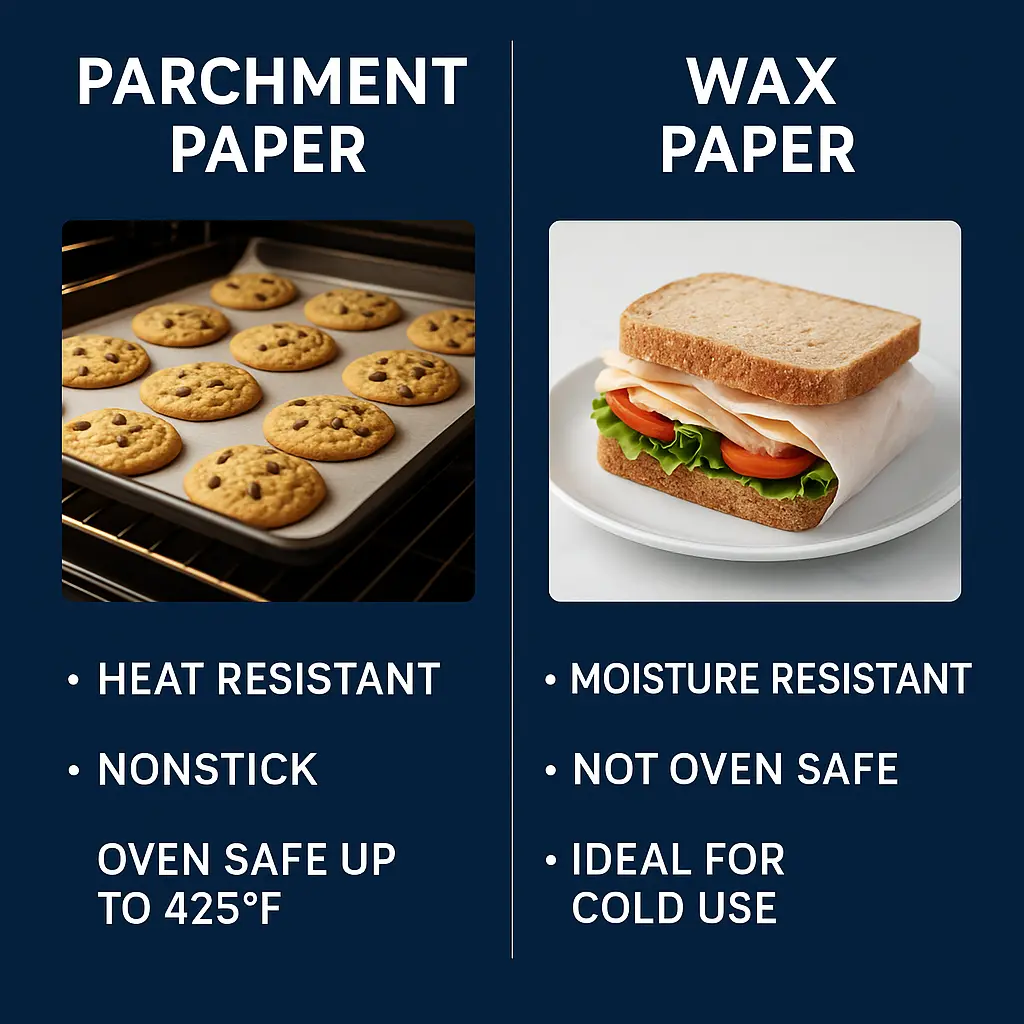
Parchment Paperis Coated with silicone, making it nonstick, moisture-resistant, andheat-resistant—typically up to 425°F (218°C). It’s safe to use in ovens and perfect for baking cookies, roasting vegetables, or lining cake pans.
-
Wax Paper, on the other hand, is coated with a thin layer of paraffin wax. While also nonstick and moisture-resistant, it cannot withstand high heat—the wax can melt or even catch fire if exposed to oven temperatures.

When to Use Parchment Paper
-
Baking cookies or pastries
-
Roasting vegetables or fish
-
Lining pans for nonstick cooking
-
Steaming food in en papillote (in a parchment packet)
-
Microwave use
When to Use Wax Paper
-
Wrapping sandwiches or cheese
-
Rolling out dough (when no heat is involved)
-
Layering between baked goods for storage
-
Covering countertops during messy tasks like dipping or drizzling
Pro Tip: Never put wax paper in the oven—it’s not heat-safe.
Both papers have their place in the kitchen. By understanding their strengths and limitations, you can save time, prevent mistakes, and make your cooking process more efficient.