

In the global packaging industry, the term “Kraft” is often synonymous with strength and sustainability. However, when it comes to the food and beverage sector, not all kraft materials are created equal. The distinction between food-grade kraft board and regular kraft packaging is not merely a matter of branding—it is a critical boundary defined by chemical safety, material purity, and rigorous regulatory compliance.
For businesses in the food service or food manufacturing industry, choosing the wrong material can lead to chemical migration, microbial contamination, and severe legal liabilities. This guide provides a technical breakdown of why food-grade kraft board is the gold standard for consumer safety and how it differs from industrial-grade alternatives.
What defines food-grade kraft board?
Food-grade kraft board is a specialized paperboard material manufactured under strict hygienic conditions and formulated to be safe for direct contact with food. Unlike regular paperboard, which may prioritize cost or structural stiffness, food-grade kraft is engineered to ensure that no harmful substances—such as heavy metals, fluorescent whitening agents (FWAs), or toxic inks—transfer to the food.
The “Kraft” process itself involves the chemical conversion of wood into wood pulp, which consists of almost pure cellulose fibers. In a food-grade context, this process is further refined to eliminate contaminants.
Key technical attributes:
- Purity: Primarily composed of virgin wood fibers to avoid the hidden chemicals found in recycled waste.
- Chemical Stability: No addition of harmful bleaching agents or unapproved dyes.
- Barrier Integration: Often treated with food-safe coatings (like PE, PLA, or aqueous coatings) to manage grease and moisture.
- Odorless: Designed to be organoleptically neutral, meaning it does not alter the taste or smell of the food.
How does food-grade kraft differ from regular packaging?
The primary difference lies in the raw material source and the chemical additives used during production. While regular kraft board is excellent for shipping electronics or heavy machinery, it poses significant risks when placed in contact with hot, oily, or acidic foods.
1. Virgin Fibers vs. Recycled Content
Regular kraft board frequently incorporates Post-Consumer Recycled (PCR) content. While eco-friendly for secondary packaging, PCR material can contain “legacy chemicals” from its previous life, such as mineral oils from old printing inks (MOSH/MOAH), phthalates, and bisphenols. Food-grade kraft board is almost exclusively made from virgin pulp to ensure a “clean slate” free from these contaminants.
2. The Role of Fluorescent Whitening Agents (FWAs)
To make regular paper look brighter and whiter, manufacturers often add FWAs. These chemicals can migrate into food, especially when exposed to heat or moisture. Food-grade kraft board—particularly the natural brown variety—is either unbleached or bleached using oxygen-based processes that do not require toxic brighteners.
3. Comparison Table: Food-Grade vs. Regular Kraft
| Feature | Food-Grade Kraft Board | Regular Kraft Packaging |
|---|---|---|
| Material Origin | 100% Virgin Wood Pulp | Recycled Fibers + Virgin Pulp |
| Direct Food Contact | Certified Safe | Not Recommended / Secondary Only |
| Chemical Additives | FDA/EU Approved Only | May contain FWAs, biocide residues |
| Migration Risk | Negligible (within SML limits) | High (MOSH, MOAH, Phthalates) |
| Manufacturing Environment | Cleanroom / GMP Certified | Standard Industrial Facility |
| Odor/Taste Transfer | Neutral | Possible chemical or “cardboard” smell |
Why is virgin pulp essential for food safety?
The use of virgin pulp is the single most important factor in the “food-grade” designation. When paper is recycled, it undergoes multiple chemical treatments. If the original paper was a newspaper or a magazine, the inks and adhesives remain in the fiber network even after processing.
The Migration Threat: MOSH and MOAH
- MOSH (Mineral Oil Saturated Hydrocarbons): Can accumulate in human organs and cause tissue damage.
- MOAH (Mineral Oil Aromatic Hydrocarbons): Linked to carcinogenic and mutagenic risks.
Because these oils are volatile, they can migrate from regular recycled packaging into dry foods (like flour or cereal) even without direct contact, simply through gas-phase transfer. Food-grade kraft board, being virgin-fiber based, eliminates this specific risk at the source.
What are the global standards for food-grade certification?
To be legally sold as “food-grade,” the board must pass specific extraction and migration tests. These tests simulate how the material behaves when it touches water, oil, and acidic substances.
1. FDA 21 CFR (United States)
The U.S. Food and Drug Administration regulates “Food Contact Substances” (FCS). Under 21 CFR 176.170 and 176.180, the board must meet strict limits on the types of adhesives, slimicides, and coatings used.
2. EU Regulation (EC) No 1935/2004
This framework ensures that materials do not transfer their constituents to food in quantities that could endanger human health. It also includes Regulation (EC) 2023/2006 on Good Manufacturing Practice (GMP), requiring documented traceability for every batch of paper produced.
3. BfR Recommendation XXXVI (Germany)
Often considered the strictest standard in Europe, the BfR (Federal Institute for Risk Assessment) provides specific “positive lists” of chemicals allowed in the production of paper and board for food contact.
How to identify authentic food-grade kraft board?
For a buyer, distinguishing between the two visually is nearly impossible. Therefore, verification relies on documentation and standardized symbols.
- The Wine Glass and Fork Symbol: This is the international icon for food-safe materials. If this is not present on the packaging or the technical data sheet (TDS), the material should not be used for direct food contact.
- Declaration of Compliance (DoC): A professional supplier will always provide a DoC. This document confirms that the material has been tested against FDA or EU standards.
- UV Light Test: A quick field test for white kraft—under UV light, regular paper with fluorescent brighteners will glow blue/purple. Food-grade white kraft (without FWAs) will remain dull or neutral.
What are the common applications for food-grade kraft?
Food-grade kraft is versatile and can be engineered with various functional barriers to suit different food types.
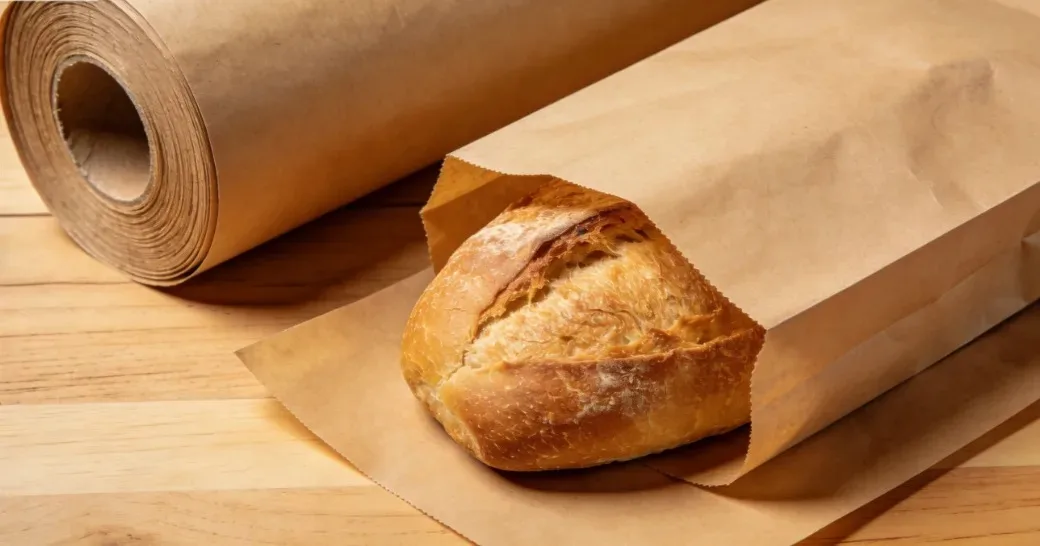
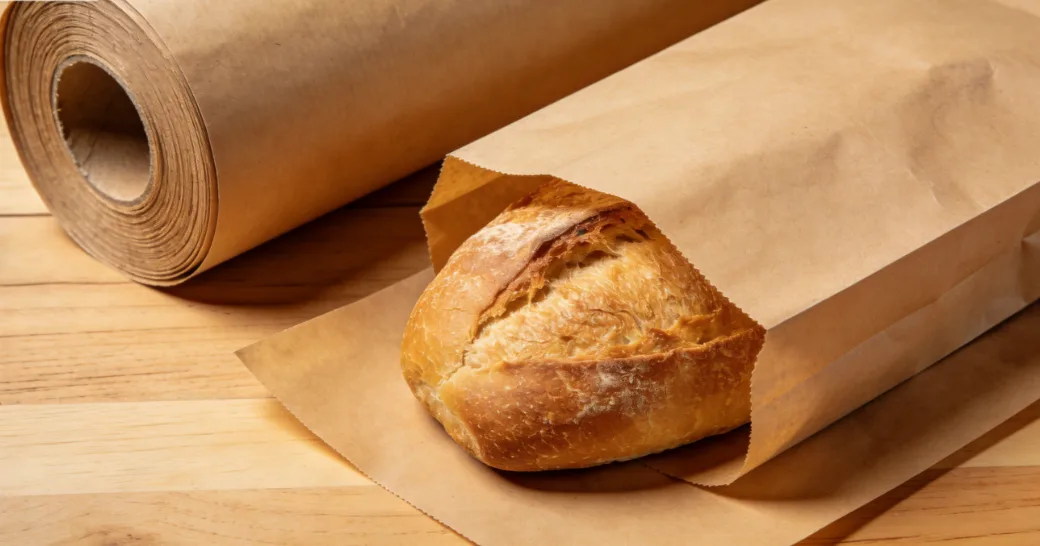
- Bakery & Pastry Boxes: Uncoated food-grade board allows bread to “breathe,” preventing sogginess while maintaining hygiene.
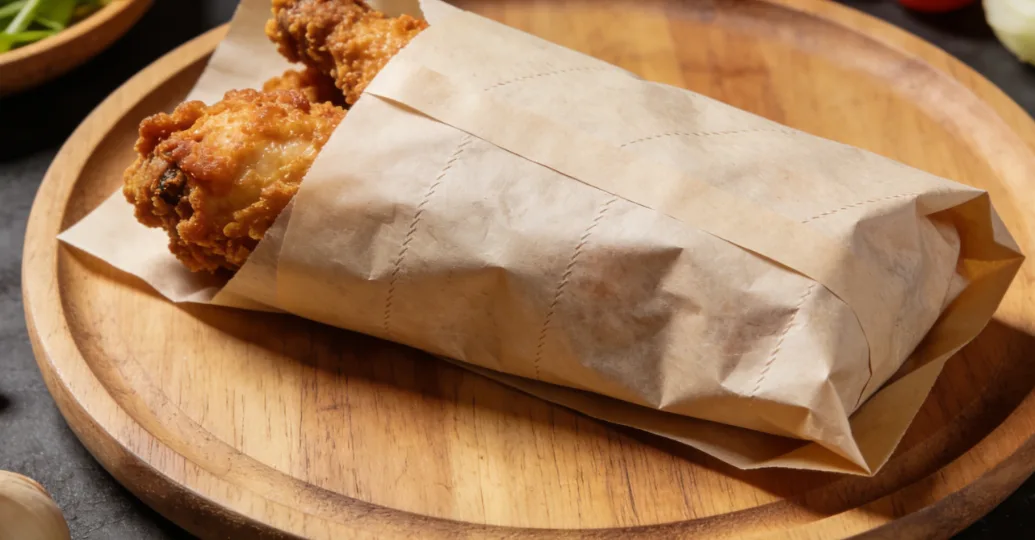
- Fast Food Wraps & Liners: Often treated with a grease-resistant coating (kit-rated) to prevent oil spots.
- Frozen Food Cartons: Specifically engineered to withstand “freeze-thaw” cycles without losing structural integrity or leaching chemicals.
- Take-Out Containers: Usually features a PE (Polyethylene) or PLA (Polylactic Acid) lining to hold liquids and sauces.
What are the risks of using regular packaging for food?
Using industrial-grade kraft for food isn’t just a quality issue; it’s a safety hazard.
- Chemical Migration: Toxic substances like lead, cadmium, and mercury (often found in recycled pulp) can leach into the food.
- Microbial Growth: Regular packaging facilities may not follow the strict pest control and sanitization protocols required in food-grade plants, leading to mold or bacterial presence.
- Brand Damage: If a customer notices a chemical smell or if a health inspector finds non-compliant packaging, the resulting recall and PR damage can be catastrophic.
FAQ: Common questions about food-grade kraft board
Is natural brown kraft paper always food-grade?
No. While many assume the brown color means “natural” and “safe,” industrial brown kraft is often made from recycled cardboard boxes (OCC) and contains high levels of mineral oils and adhesives. Always check for food-grade certification.
Can food-grade kraft board be recycled?
Yes, but with a caveat. If the board is coated with plastic (PE), it requires specialized recycling facilities. If it is uncoated or uses an aqueous “bio-coating,” it is easily recyclable in standard paper streams.
Is food-grade kraft board more expensive than regular packaging?
Typically, yes. The cost of virgin pulp and the rigorous testing/certification processes add a premium of 10% to 25% over industrial recycled board. However, this is significantly cheaper than the cost of a food safety lawsuit.
What is the difference between “food-grade” and “food-safe”?
“Food-grade” refers to the quality of the material itself (the “ingredients” of the paper). “Food-safe” refers to the finished product in its intended use (e.g., a food-grade board is only “food-safe” for hot soup if it also has the correct heat-resistant coating).
How do I know if my supplier is providing genuine food-grade board?
Request a formal “Certificate of Analysis” (COA) for your specific batch and a third-party test report from labs like SGS, Intertek, or TUV that references FDA or EU 1935/2004 standards.