
The global fast-food landscape is shifting. As consumer expectations for food quality, hygiene, and branding soar, the materials used to wrap and contain our favorite meals have come under intense scrutiny. At the heart of this evolution is custom PE coated paper, a versatile and high-performance material that has become the backbone of modern food service.
In this comprehensive guide, we will explore how this technology works, why it is indispensable for the fast-food industry, and how businesses can leverage customized solutions to enhance their brand and product integrity.
Why Is PE Coated Paper Best for Greasy Food?
When dealing with burgers, fried chicken, or french fries, the biggest enemy of packaging is oil. Traditional paper is porous; it absorbs grease, leading to soggy packaging, messy hands, and a poor customer experience. Greaseproof paper for fast food solved this by integrating a Polyethylene (PE) layer.
The Science of the Barrier
PE (Polyethylene) is a thermoplastic resin that, when applied as a thin coating onto paperboard or paper sheets, creates a non-porous surface. This barrier serves two primary functions:
- Oleophobic Properties: It prevents oils and fats from penetrating the paper fibers.
- Hydrophobic Properties: It acts as a moisture barrier paper packaging solution, ensuring that steam from hot food doesn’t turn the wrapper into pulp.
Comparative Analysis: Standard Paper vs. PE Coated Paper
| Feature | Standard Kraft Paper | PE Coated Paper |
|---|---|---|
| Grease Resistance | Low (Absorbs oil) | High (Repels oil) |
| Moisture Resistance | Poor (Becomes soft) | Excellent (Waterproof layer) |
| Heat Sealability | No | Yes (PE melts to seal) |
| Durability | Tearing risk when wet | High Tensile Strength |
| Primary Use | Dry goods, grocery bags | Burgers, wraps, fried chicken |
What Are the Key Technical Specifications of PE Coated Paper?
Understanding the technicality of disposable food container raw materials is essential for procurement managers and brand owners. PE coated paper isn’t a one-size-fits-all product; it is a highly engineered substrate.
Base Paper Selection
The base paper is usually Food Grade Kraft or Wood-free paper. The quality of this base determines the thickness and the feel of the final product.
Coating Methods: Single vs. Double Sided
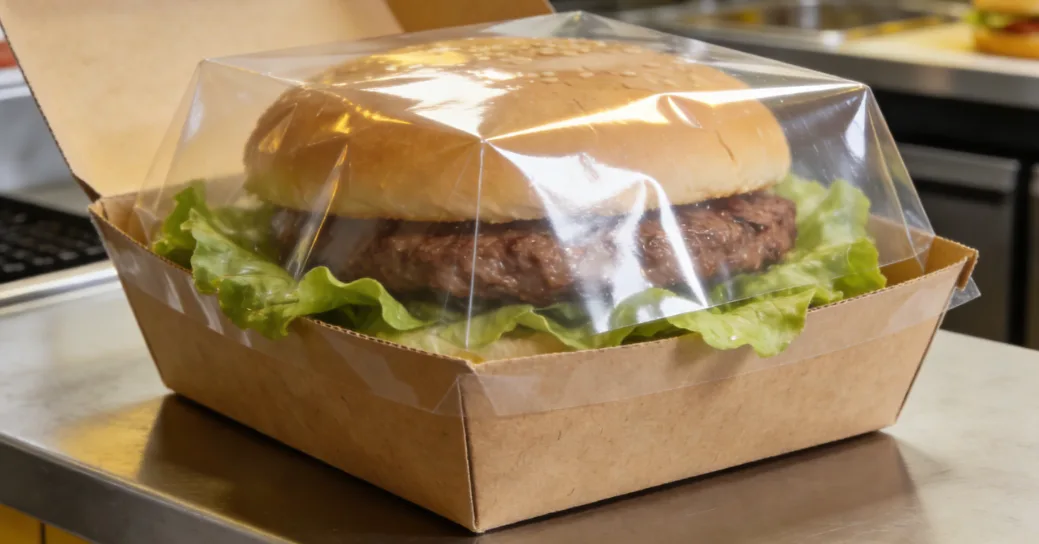
- Single-Sided PE: Ideally used for PE coated paper for burger wrapping. The PE is on the inside to protect the food, while the outside remains tactile for easy gripping and printing.
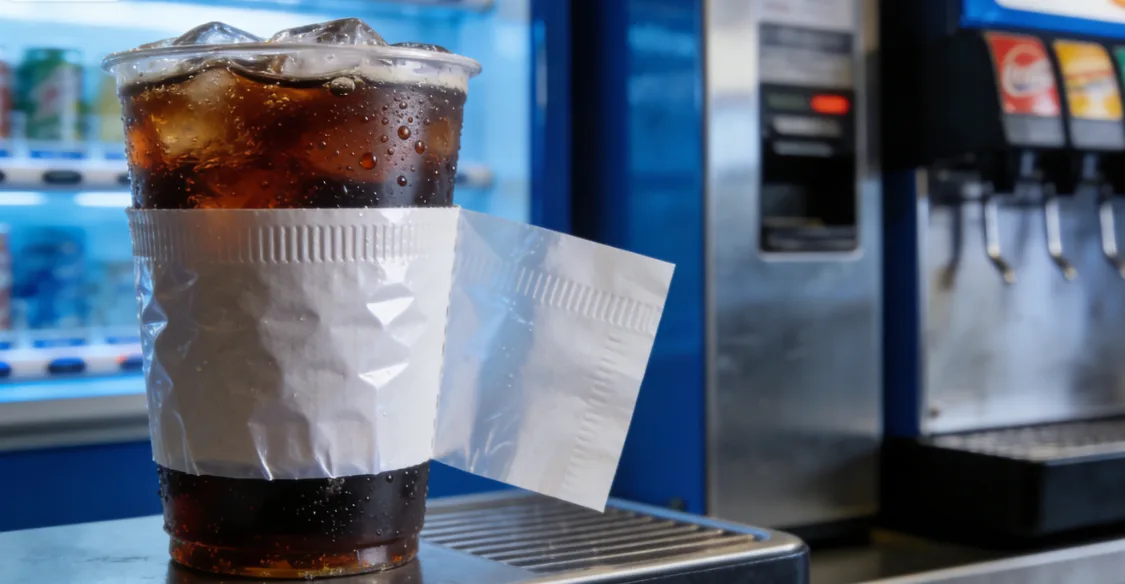
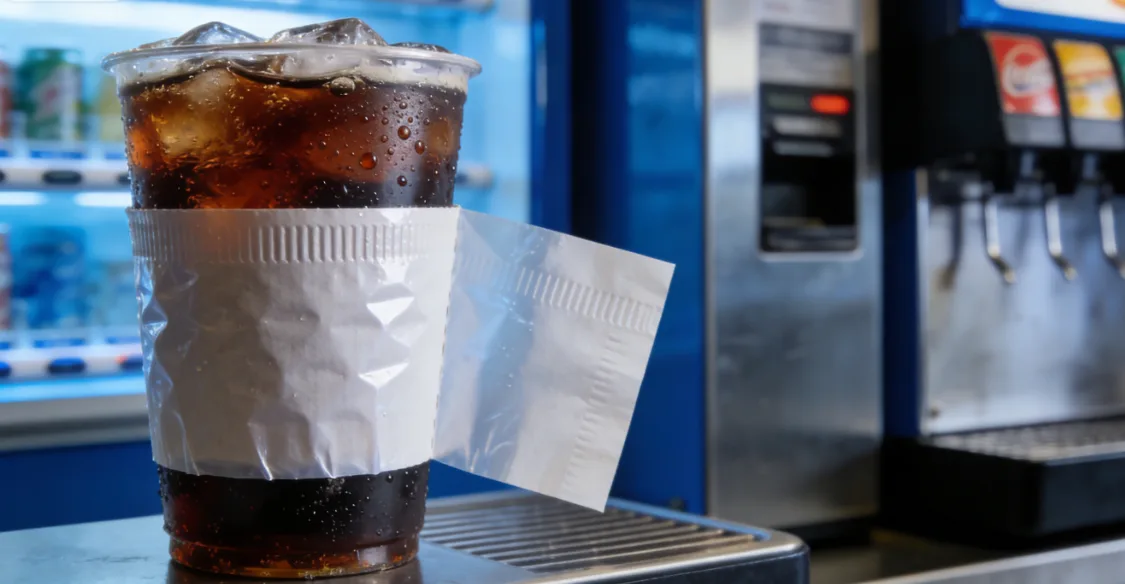
- Double-sided PE coated paperboard: Essential for cold beverages and frozen food. The internal layer prevents the liquid from soaking through, while the external layer prevents condensation from weakening the cup or box.
Grammage (GSM) Configuration
The weight of the paper is measured in Grams per Square Meter (GSM).
- Wrapping Paper: Typically 28 GSM to 60 GSM base paper + 10-15 GSM PE.
- Paper Cups/Boxes: Typically 150 GSM to 350 GSM base paper + 15-20 GSM PE.
Can I Customize the GSM for PE Coated Paper?
One of the most frequent questions from fast-food chains is regarding customization. The short answer is yes. Customization is the “secret sauce” that allows a brand to balance cost-efficiency with functional performance.
Factors Influencing GSM Customization
- Food Weight: A heavy burrito requires a higher GSM wrapper than a small cookie.
- Oil Content: Highly greasy foods may require a thicker PE layer (e.g., 18g PE instead of 12g).
- Storage Duration: If the food sits in a warming tray, a sturdier custom printed food paper is necessary to withstand prolonged heat exposure.
The Customization Process
When ordering wholesale food grade paper sheets, you can specify:
- The Base Paper Weight: Choose from lightweight tissue to heavy-duty paperboard.
- The PE Thickness: Measured in microns or GSM.
- Finish: Glossy or Matte PE coatings depending on the desired aesthetic.
How Does PE Coating Prevent Leakage in Paper Containers?
Leakage is the ultimate failure in food packaging. Whether it’s a gravy-filled bowl or a greasy pizza box, the integrity of the seal is paramount.
The Heat-Sealing Advantage
One of the unique properties of Polyethylene is its low melting point. In the manufacturing of disposable bowls or cups, the PE coating acts as an adhesive. When heat is applied to the joints of the container, the PE melts and fuses the paper together, creating a hermetic, leak-proof seal.
Preventing Wicking
“Wicking” occurs when liquid travels through the exposed edges of the paper. High-quality double-sided PE coated paperboard undergoes a process called “edge-wicking protection” during conversion, ensuring that even the cut edges of the paper do not absorb liquids. This is crucial for maintaining the structural integrity of disposable food container raw materials over several hours.
What Is the Best Paper for Frozen Food Packaging?
Frozen food presents a unique challenge: the transition from sub-zero temperatures to room temperature causes condensation. This moisture can cause standard packaging to collapse.
Why Double-Sided PE is the Standard
For frozen applications, moisture barrier paper packaging must be applied to both sides.
- Inside: Protects against the moisture of the food itself.
- Outside: Protects against the frost and condensation that forms on the exterior of the package in the freezer or during thawing.
Durability in Cold Chains
PE remains flexible at low temperatures. Unlike some coatings that become brittle and crack when frozen, PE maintains its barrier properties, ensuring the food remains uncontaminated and the custom printed food paper looks pristine upon reaching the consumer.
Benefits of Using PE Coated Paper for Coffee Cups?
The coffee industry is perhaps the largest consumer of PE coated materials. If you have ever wondered why a paper cup doesn’t turn into a soggy mess within minutes, the answer lies in the thin PE lining.
1. Thermal Stability
PE coating can withstand temperatures up to 90∘C to 100∘C without losing its structural integrity, making it perfect for hot lattes and Americanos.
2. Hygiene and Safety
As a food grade paper product, PE is inert and does not leach chemicals into the drink, provided it is sourced from reputable manufacturers following FDA or EU food safety standards.
3. Excellent Printability
Customization isn’t just about the coating; it’s about the branding. Custom printed food paper used for cups allows for high-definition flexographic or offset printing. The smooth surface provided by the PE-treated substrate ensures that logos and brand colors are vibrant and sharp.
Steps to Choosing the Right Wholesale Food Grade Paper Sheets
Selecting the right supplier and material for your fast-food business involves a strategic approach.
- Define the Food Type: Is it dry, greasy, hot, or frozen?
- Determine the Application: Are you wrapping (requires flexibility) or boxing (requires rigidity)?
- Specify Coating Requirements: Single-sided for cost-saving; double-sided for maximum moisture protection.
- Audit for Food Safety: Ensure the supplier provides certifications (e.g., FSC, SGS, FDA) for their disposable food container raw materials.
- Request Samples for Testing: Always test the grease resistance by placing your actual food product in the paper for the maximum expected “hold time.”
The Environmental Perspective: PE vs. PLA
While PE is the industry standard due to its performance and cost-effectiveness, the industry is also seeing a rise in PLA (Polylactic Acid) coatings.
- PE Coated: Excellent barrier, recyclable in specific facilities, cost-effective.
- PLA Coated: Compostable, bio-based, but higher cost and lower heat resistance.
For most high-volume fast-food operations, custom PE coated paper remains the preferred choice because of its superior performance in preventing oil leakage and its ability to be processed by existing recycling infrastructure that handles poly-coated cartons.
FAQ: Everything You Need to Know About Custom PE Coated Paper
Why is PE coated paper essential for fast food?
PE coated paper is essential because it provides an impermeable barrier against grease and moisture. This ensures that PE coated paper for burger wrapping keeps the food fresh and the packaging intact, preventing the messy “soggy bag” syndrome that can damage a brand’s reputation.
Can I print my logo on greaseproof paper for fast food?
Yes, custom printed food paper is highly customizable. Most manufacturers use food-safe, water-based inks that adhere perfectly to the paper surface. This allows fast-food brands to turn their packaging into a mobile billboard, enhancing brand recognition with every meal served.
Is PE coated paperboard safe for direct food contact?
Absolutely. All wholesale food grade paper sheets must adhere to strict international safety standards. The PE used is a virgin polymer that does not contain harmful plasticizers like BPA, making it safe for hot and cold food contact according to FDA and EU regulations.
How does moisture barrier paper packaging improve shelf life?
By preventing the exchange of moisture between the food and the external environment, moisture barrier paper packaging helps maintain the texture of the food. It prevents crispy items from becoming soft and prevents moist items from drying out, effectively extending the “optimal taste” window.
Is double-sided PE coated paperboard necessary for all containers?
No, it is specifically necessary for applications where moisture is present on both sides. This includes ice cream tubs, cold soda cups (due to external condensation), and frozen food boxes. For standard dry or hot food boxes, single-sided PE is usually sufficient and more economica