


The global packaging and food service industries are shifting rapidly toward materials that combine structural integrity with functional barriers. PE (Polyethylene) coated offset paper has emerged as a premier choice for applications ranging from high-quality food wrapping to industrial packaging. However, the performance of your final product depends entirely on the technical proficiency of your supplier.
Selecting a PE coated paper supplier involves more than just comparing price quotes; it requires a deep dive into material science, manufacturing precision, and supply chain reliability. This guide provides a comprehensive framework for procurement professionals to evaluate and secure the best manufacturing partners.
Why is offset paper preferred over Kraft paper for specific PE applications?
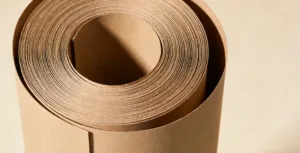
While Kraft paper is known for its rugged, organic look, offset paper (wood-free paper) offers distinct advantages when combined with PE coating, particularly in branding and precision-heavy industries.
Visual and Print Performance
Offset paper features a smoother, whiter surface compared to the fibrous texture of Kraft. When a PE layer is applied, the surface remains incredibly flat, making it the superior choice for high-resolution offset and flexographic printing. For brands that require vibrant logos and crisp text on their packaging, offset paper is the industry standard.
Consistency and Thickness Uniformity
Offset paper is manufactured to strict thickness tolerances. This uniformity ensures that when the PE resin is extruded onto the substrate, the coating weight remains consistent across the entire web width. In high-speed automated packaging lines, this consistency prevents machine jams and ensures a perfect seal every time.
Comparative Overview: Offset vs. Kraft for PE Coating
| Feature | PE Coated Offset Paper | PE Coated Kraft Paper |
|---|---|---|
| Surface Smoothness | High (Ideal for fine print) | Low to Medium (Textured) |
| Whiteness/Brightness | 85% – 95% | Usually Brown or Bleached White |
| Porosity | Lower (Better ink holdout) | Higher (More absorbent) |
| Common Uses | Sugar sachets, medical pads, high-end food wraps | Takeout bags, heavy-duty industrial wraps |
What are the quality benchmarks for high-quality PE coated offset paper?
To identify a reliable PE coated paper supplier, you must understand the technical benchmarks that separate premium products from sub-standard materials. Quality is defined by the synergy between the base paper and the polymer layer.
Base Paper Specifications
A high-quality manufacturer starts with premium virgin wood pulp offset paper. The base weight (GSM) should have a variance of no more than ±3%. Key metrics include:
- Brightness: High ISO brightness for color fidelity.
- Sizing Value: Proper internal sizing to prevent moisture from wicking into the paper edges.
PE Coating Characteristics
The PE layer (typically LDPE or HDPE) must be food-grade and applied via extrusion coating.
- Coating Weight: Standard ranges vary from 10g/m2 to 20g/m2. A reliable manufacturer uses automated scanners to ensure the coating is even.
- Pinholes: High-quality paper should have zero pinholes per square meter, ensuring a 100% moisture barrier.
High-tensile strength PE paper requirements
In industrial applications, high-tensile strength PE paper is non-negotiable. This property is measured by the force required to break a strip of paper. The PE coating actually enhances the tensile strength and tear resistance of the base offset paper, making it suitable for heavy-duty wrapping.
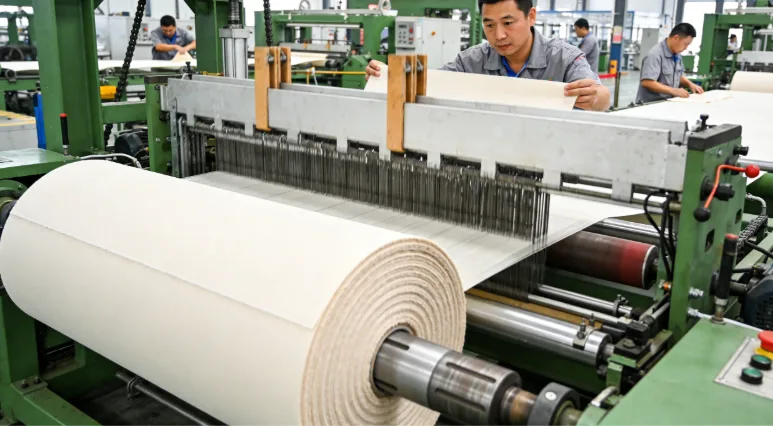
How to test the coating adhesion of PE offset paper?
One of the most common failures in low-quality PE paper is “delamination,” where the plastic film peels away from the paper. When sourcing PE paper from China or other global hubs, you should request “Tape Tests” or “Tear Tests” documentation.
The Manual Tear Test
- Take a sample of the PE coated offset paper.
- Slowly pull the PE film away from the paper substrate.
- The Benchmark: If the film pulls away clean, the adhesion is poor. If the film tears the paper fibers away with it (fiber tear), the adhesion is excellent.
The Heat Seal Strength Test
Since PE paper is often used in heat-sealing machines, the coating must fuse perfectly under heat. A reliable manufacturer will use a Heat Sealer Tester to measure the force (N/15mm) required to pull a sealed joint apart.
Surface Tension (Dyne Level)
For manufacturers who offer printable PE surfaces (double-sided coating or treated PE), the Dyne level should be checked using corona treatment. A Dyne level of 38 dynes/cm or higher is usually required for proper ink adhesion on the plastic side.
How to prevent edge curling in PE coated paper rolls?
Edge curling is the “achilles heel” of PE coated paper, often caused by the tension difference between the paper and the plastic layer, or by fluctuations in environmental humidity.
Moisture Content Control
The base offset paper must be dried to a specific moisture percentage (usually 4% to 6%) before coating. If the paper is too damp, it will shrink after the PE is applied, causing the edges to curl upward.
Tension Control During Slitting
When producing wholesale offset paper in rolls, the rewinding tension must be tapered. If the roll is wound too tightly, the “memory” of the curl becomes permanent. Professional manufacturers use automated tension control systems to ensure the paper remains flat when unwound by the end-user.
Storage and Acclimatization
A professional manufacturer will wrap finished rolls in moisture-proof stretch film. As a buyer, you should ensure your supplier provides guidance on “acclimatizing” the paper to your workshop’s temperature for 24–48 hours before opening the protective wrap.
What is the lead time for custom-size PE coated offset paper?
Lead times are a critical factor in bulk PE coated paper pricing and logistics planning. Generally, lead times are split into three phases:
- Raw Material Procurement (3–7 days): Sourcing the specific GSM of offset paper if not in stock.
- Coating and Processing (5–10 days): The actual extrusion coating and curing process.
- Slitting and Packaging (2–4 days): Cutting the master rolls into custom widths or sheets.
For standard specifications, a reliable manufacturer should offer a lead time of 15 to 21 days. When sourcing PE paper from China, you must also factor in 3–5 weeks for ocean freight, depending on your destination port.
How to evaluate greaseproof offset paper performance?
In the food industry, greaseproof offset paper performance is the primary KPI. While PE is naturally resistant to grease, the thickness and density of the coating determine how long the barrier holds.
The KIT Test
The industry standard for measuring grease resistance is the KIT test (TAPPI T 559). It uses a series of reagents with varying surface tensions. High-quality PE coated paper for food wraps should achieve a KIT Level 10 to 12, meaning it can withstand aggressive fats and oils without staining the outer paper layer.
Barrier Consistency
A reliable manufacturer will conduct “Cobv tests” to measure water absorption. For PE coated paper, the water absorption on the coated side should be near zero, ensuring the structural integrity of the package even when in contact with moist or oily foods.
Why is factory auditing essential when sourcing PE paper from China?
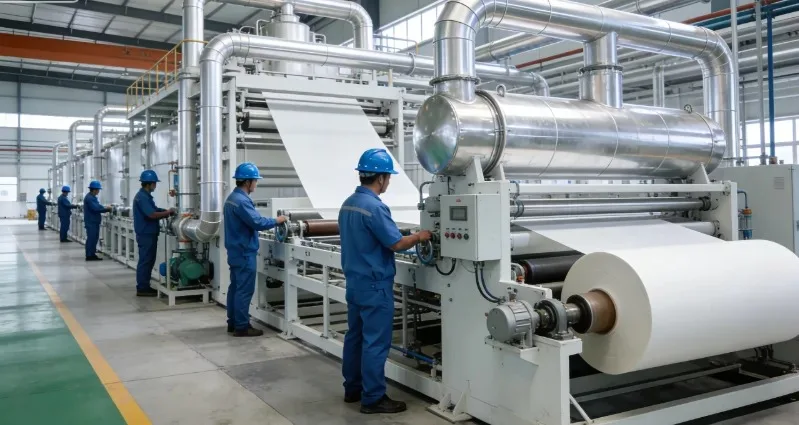
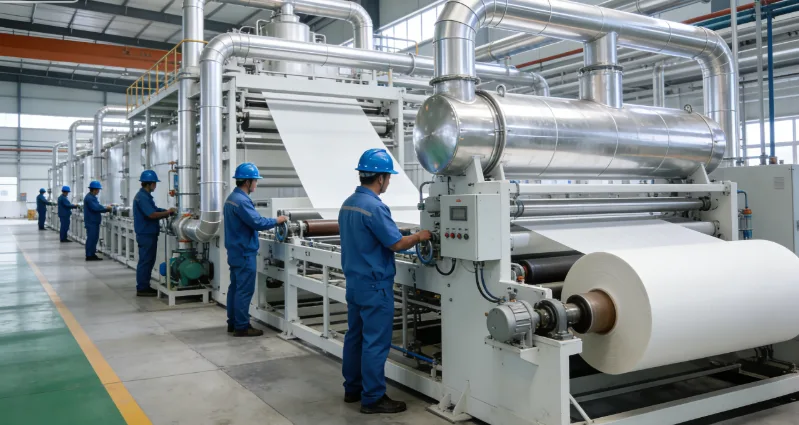
China is the global leader in wholesale offset paper and PE extrusion, offering competitive bulk PE coated paper pricing. However, the vast number of suppliers means buyers must be diligent.
Certifications to Look For
- ISO 9001: For quality management systems.
- FSC (Forest Stewardship Council): Ensures the offset paper comes from sustainably managed forests.
- FDA/SGS/EU Food Grade: Critical if the paper will touch food. The PE resin must be virgin (non-recycled) to meet safety standards.
Technical Capability Audit
Does the manufacturer have an in-house laboratory? A reliable partner should be able to provide COA (Certificate of Analysis) reports for every batch, detailing the GSM, tensile strength, and coating thickness.
FAQ
What are the standard specifications for PE coated offset paper?
High-quality PE coated offset paper typically uses a base paper ranging from 40gsm to 120gsm, with a PE coating layer of 10gsm to 20gsm. It is available in both gloss and matte finishes, depending on the extrusion process. The most common applications include sugar packets, medical packaging, and disposable food liners.
Can PE coated offset paper be recycled?
While traditional paper is easily recyclable, the PE coating must be separated from the fibers in specialized pulping facilities. Many modern PE coated paper suppliers are now offering “Bio-PE” or water-based coatings as eco-friendly alternatives to traditional polyethylene to improve the recyclability profile of the product.
How does coating thickness affect bulk PE coated paper pricing?
Pricing is largely determined by the weight of the base paper and the weight of the PE resin. A 15g PE coating is more expensive than a 10g coating because it uses more raw polymer. However, a thicker coating provides a better moisture barrier and higher seal strength, which may reduce product loss in the long run.
What is the shelf life of PE coated paper rolls?
When stored in a cool, dry environment and kept in its original moisture-proof packaging, PE coated offset paper has a shelf life of approximately 12 to 18 months. Over time, the corona treatment on the PE surface may diminish, which can affect ink adhesion if you plan to print on the plastic side.
How do I verify a PE coated paper supplier’s reputation?
Look for suppliers who provide transparent technical data sheets and have a history of exporting to regulated markets like the US or EU. Requesting a factory video tour or a sample prototype is a standard part of the vetting process for sourcing PE paper from China to ensure the facility meets international hygiene and production standards.