
In the global packaging and industrial materials market, selecting the Right Paper product is critical for performance, cost-efficiency, and compliance. However, many buyers often confuse greaseproof paper with silicone coated paper—a mix-up that can lead to costly mistakes, from product failures to customs delays. At SURE PAPER , we understand these challenges firsthand.
This blog cuts through the confusion by providing a clear, side-by-side comparison of these two materials, covering essential properties like grease resistance, heat tolerance, environmental impact, and HS codes. Whether you’re sourcing packaging for food products, industrial liners, or high-temperature applications, this guide will empower you to:
Avoid supply chain errors caused by misclassified HS codes.
Optimize costs by matching material properties to your specific use case.
Enhance product performance with science-backed insights into durability and compliance.
Product Characteristics Comparison Table
|
Characteristic |
Greaseproof Paper |
Silicone Coated Paper |
|
Grease Resistance Level |
Moderate to High (dense fiber structure resists oil, but may allow penetration with heavy/oily substances) |
Extremely High (silicone coating fully blocks oil and grease) |
|
Ignition Point |
~150–200°C (flammable due to cellulose base) |
~220–250°C (silicone layer resists heat, but paper base remains combustible) |
|
Grammage (g/m²) |
Lightweight: 20–50 g/m² |
Heavier: 38–80 g/m² (increased weight from coating) |
|
Water Solubility |
Insoluble in water, but softens when wet |
Insoluble in water; silicone coating repels water (surface waterproof) |
|
HS Code |
4806.2000 (ungreased greaseproof paper) |
4811.5900 (coated paper, silicone-based) |

Application Scenarios Comparison
|
Scenario |
Greaseproof Paper |
Silicone Coated Paper |
|
Food Packaging |
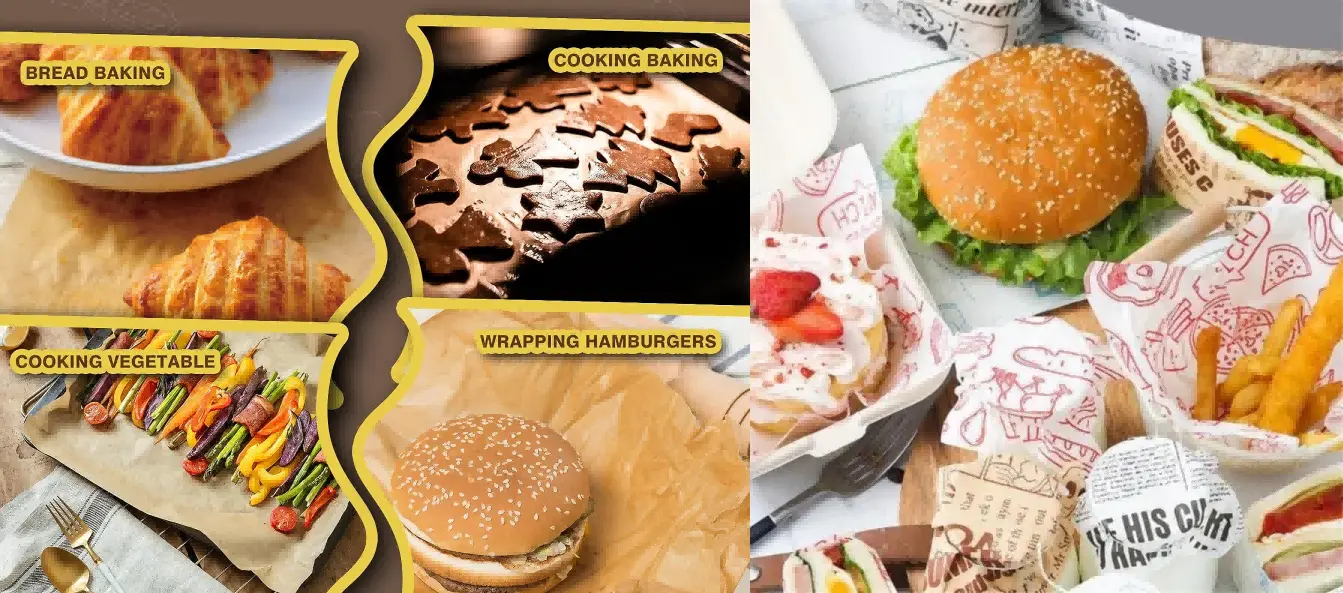
Burger wraps, pastry liners (short-term oil resistance) |
Baking parchment, chocolate molds (heat-resistant and non-stick) |
|
Industrial Use |
Anti-grease lining for machinery parts |
Label release liners, adhesive tape backing |
|
Eco-Friendliness |
Biodegradable (pure paper base) |
Silicone coating may hinder recycling (requires specialized processing) |
Key Notes
HS Codes: Ensure alignment with target country’s customs regulations (subheadings may vary).
Temperature Limits: Silicone paper is preferred for oven use, while greaseproof paper suits low-heat applications.
Environmental Impact: Greaseproof paper is more eco-friendly for single-use packaging.