
Ultimate Guide: What is the Difference Between Art Board and Ivory Board?
When navigating the world of high-end printing and packaging, choosing the right substrate is the bridge between a mediocre product and a premium brand experience. Two of the most common yet frequently confused materials are Art Board (often referred to as Art Card or C2S Board) and Ivory Board (also known as FBB or Folding Boxboard).
While they may look similar to the untrained eye, their structural compositions, printing behaviors, and tactile qualities differ significantly. This comprehensive guide explores the technical nuances, performance metrics, and industry applications to help you make an informed decision.
What are the Fundamental Definitions of Art Board and Ivory Board?
Before diving into the technical comparisons, it is essential to establish a clear definition of each material. Both belong to the “paperboard” family, but their manufacturing processes and raw materials create distinct personalities.
What is Art Board (C2S Coated Board)?
Art Board is a high-grade paperboard that is coated on both sides (C2S – Coated 2 Sides) with a mixture of pigments and binders (usually clay or calcium carbonate). The base is typically made from bleached chemical pulp. The primary goal of Art Board is to provide an ultra-smooth, high-gloss, or matte surface that allows for high-fidelity ink reproduction.
What is Ivory Board (FBB/SBS)?
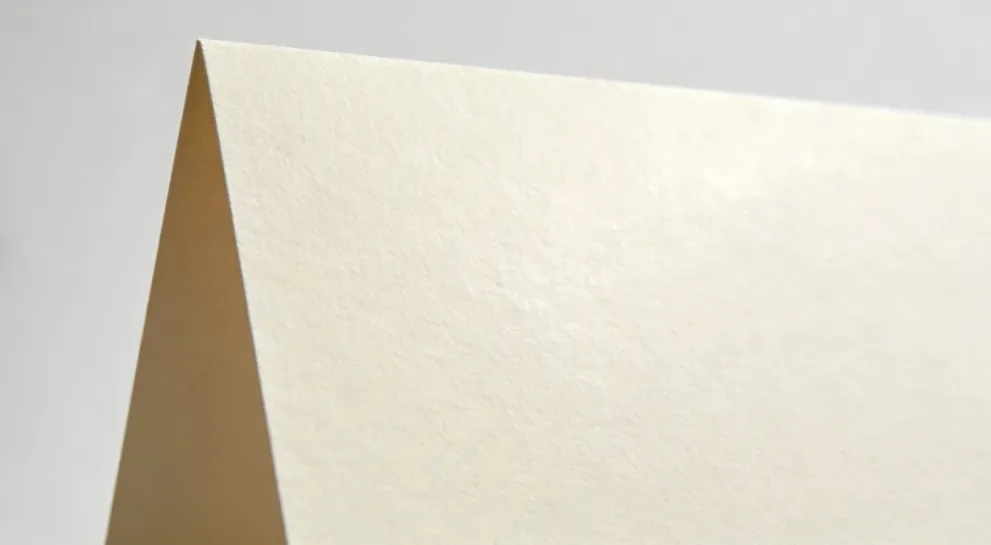
Ivory Board, strictly speaking, is a premium “solid bleached sulfate” (SBS) or “folding boxboard” (FBB). It is made from multiple layers of chemical pulp, which gives it its signature stiffness. Unlike Art Board, traditional Ivory Board (C1S) is usually coated only on one side with a superior finish, while the reverse side remains uncoated or lightly treated, maintaining a clean, natural “ivory” or white look.
Comparison Table: Art Board vs. Ivory Board at a Glance
To facilitate quick decision-making, the following table outlines the core technical specifications and physical properties of both materials.
| Feature | Art Board (Coated Board) | Ivory Board (Premium Cardstock) |
|---|---|---|
| Surface Coating | Double-sided (C2S) or Single-sided (C1S) | Typically Single-sided (C1S) |
| Pulp Composition | High wood pulp content, often coated | 100% Virgin wood pulp (Multi-layer) |
| Whiteness | High (85% – 90%+) | Ultra-high (92% – 95%+) |
| Stiffness/Rigidity | Moderate (More flexible) | Superior (Very rigid/sturdy) |
| Thickness (Caliper) | Usually 0.06mm – 0.46mm | Thicker, ranging from 0.27mm – 0.55mm |
| Weight (GSM) | 80gsm – 450gsm | 190gsm – 450gsm (Commonly 210-350) |
| Ink Absorption | Low (Inks sit on top for vibrance) | Moderate (Uniform and sharp) |
| Texture | Smooth, Glossy, or Matte | Smooth on top; textured on the back |
Why Does Ivory Board Have Superior Stiffness Compared to Art Board?
In the printing industry, “hand feel” and “rigidity” are often the deciding factors for luxury packaging. Stiffness is the defining characteristic of Ivory Board.
The Multi-Layer Secret
Ivory Board is constructed using a multi-layering process. During manufacturing, multiple plies of bleached chemical pulp are pressed together. This layered structure acts similarly to an “I-beam” in construction, providing immense resistance to bending.
Why Art Board is More Flexible
Art Board, while dense, is often calendared (pressed between rollers) more intensely to achieve its signature smoothness. This process compresses the fibers, making the board thinner and more flexible for the same weight (GSM). While this is excellent for brochures that need to fold neatly, it lacks the “snap” required for high-end business cards or sturdy gift boxes.
How Do Printing Results Differ Between Art Board and Ivory Board?
The visual outcome of a print job is dictated by how the surface interacts with ink. This is where the distinction between C2S (Coated 2 Sides) and C1S (Coated 1 Side) becomes critical.
1. Color Vibrancy on Art Board
Because Art Board is heavily coated on both sides, it is the gold standard for double-sided color printing.
- Ink Holdout: The coating prevents ink from soaking deep into the fibers. Instead, the ink dries on the surface, resulting in incredibly vibrant, “popping” colors.
- Detail: It excels in reproducing high-resolution photography, gradients, and fine-line art.
2. The Functional Backside of Ivory Board
Ivory Board is the king of functional packaging.
- Front Side: Provides a premium, high-whiteness surface for brand logos and graphics.
- Reverse Side: The uncoated or matte reverse is perfect for writing. This is why Ivory Board is the preferred choice for appointment cards, loyalty cards, and postcards—you can print a beautiful image on the front and write clearly with a ballpoint pen on the back without smudging.
What are the Primary Industry Applications for Each?
Choosing between these two depends largely on the final application. Here is a breakdown of where each material shines.
When to Choose Art Board:
- Marketing Collateral: High-end brochures, flyers, and leaflets.
- Magazines and Catalogs: Specifically for covers that require a glossy, professional finish.
- Posters: Where flexibility and color saturation are prioritized.
- Book Jackets: To provide a smooth, protective, and visually striking exterior.
When to Choose Ivory Board:
- Premium Packaging: Medicine boxes, cosmetic cartons, and perfume packaging where structural integrity is vital.
- Business Stationery: Luxury business cards, certificates, and invitation cards.
- Food Packaging: Because high-quality Ivory Board is made from 100% virgin pulp, it is often food-grade and safe for direct contact with dry foods.
- Retail Tags: Clothing hang tags that must remain crisp and not bend easily.
Technical Spotlight: Grammage (GSM) vs. Thickness (Caliper)
One of the most common mistakes in procurement is assuming that higher GSM (Grams per Square Meter) always means a thicker board.
Expert Insight: A 300gsm Art Board and a 300gsm Ivory Board will feel different. The Ivory Board will almost always be thicker (higher caliper) because it is less compressed during the manufacturing process.
If you are designing a box that needs to support a certain weight, you should look at the caliper (pt or mm) rather than just the weight. Ivory board offers a higher “bulk,” meaning you get more thickness for less weight, which can sometimes be more cost-effective for shipping.
How to Determine Which Board is Right for Your Project?
To choose between Art Board and Ivory Board, ask yourself these three “Elimination Questions”:
-
Does it need to be printed on both sides with high-res photos? * Yes: Choose Art Board (C2S) .
-
Does it need to be very stiff and stand upright?
- Yes: Choose Ivory Board.
-
Will the user need to write on the back?
- Yes: Choose Ivory Board (C1S) .
Frequently Asked Questions (FAQ)
What is the whiteness difference between Art Board and Ivory Board?
Ivory board generally has a higher whiteness level, often exceeding 92% on the whiteness scale. It is designed to look “cleaner” and more “pure.” Art board, while also white, can sometimes have a slightly blue or yellow tint depending on the specific clay coating used by the manufacturer.
Is Ivory Board more expensive than Art Board?
Generally, yes. Ivory Board is made from 100% virgin wood pulp and undergoes a more complex multi-layer manufacturing process. Art Board is often more mass-produced and can include a mix of fibers, making it a more budget-friendly option for high-volume marketing materials like flyers.
Can I use Art Board for food packaging?
While Art Board can be used for secondary packaging (the outer box), it is not always recommended for direct food contact unless it is specifically certified. Ivory Board (FBB) is the industry standard for food-grade packaging because its virgin pulp composition is free from the contaminants sometimes found in recycled-mix boards.
Which board is better for foil stamping and embossing?
Ivory Board is significantly better for embossing and foil stamping. Its superior thickness and fiber strength allow the “stamping” to hold its shape without the board cracking or the impression fading. The stiffness of Ivory Board provides the necessary resistance for a deep, high-quality emboss.
Is Ivory Board the same as Duplex Board?
No. Duplex board is usually made with a grey or white recycled back (CCNB/WLC) and is a lower-grade material. Ivory Board is a premium “Virgin Board” made entirely from high-quality bleached pulp. Ivory Board is much stronger, whiter, and more expensive than standard Duplex Board.