

The global paper market relies heavily on Chinese manufacturing prowess. For international buyers, navigating the landscape of Chinese industrial paper suppliers requires an understanding of regional hubs, product specializations, and the technical standards that govern international trade. This guide provides a comprehensive breakdown of top-tier suppliers and the essential criteria for selecting a long-term partner.
Why should international buyers source paper from China?
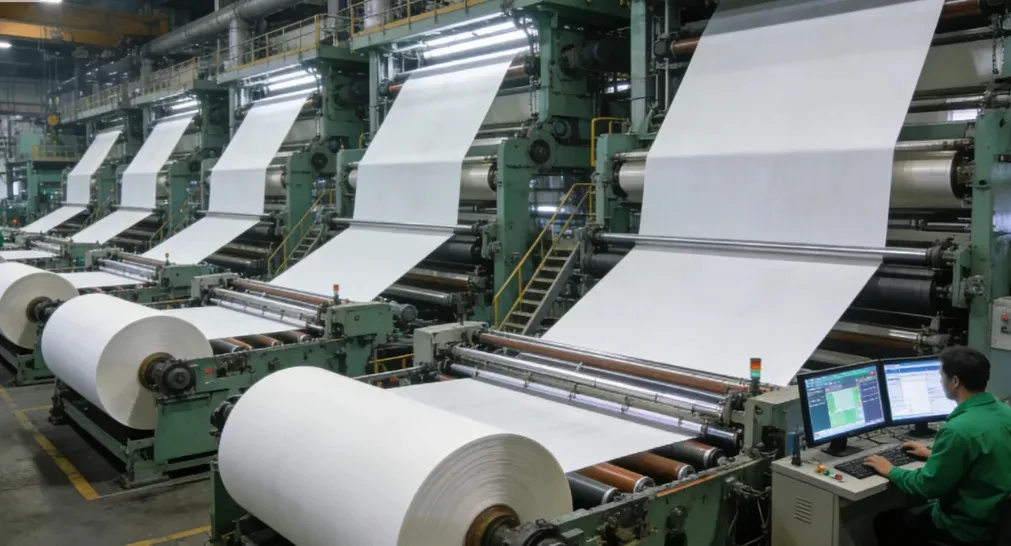
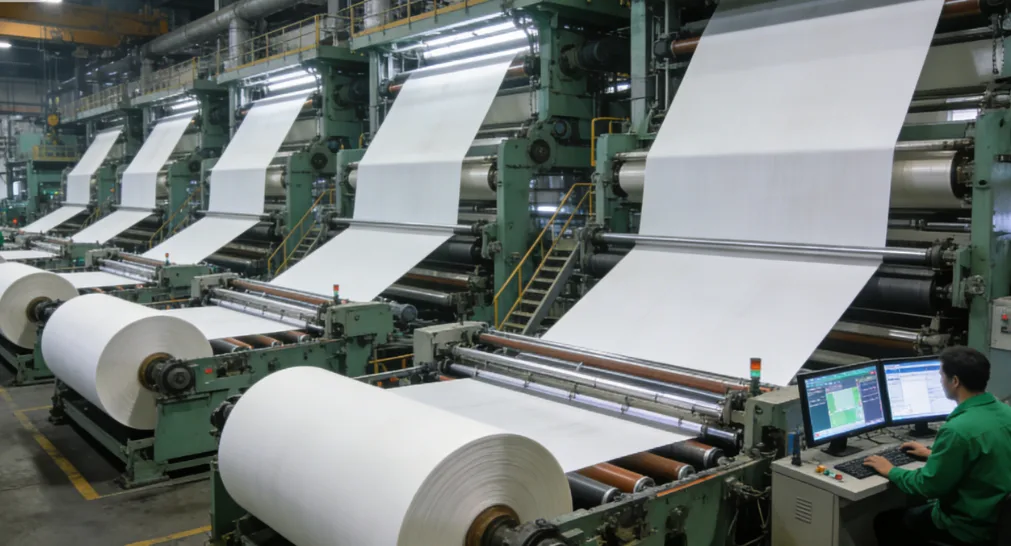
China currently stands as the world’s largest producer of paper and paperboard. The advantage for international buyers is not merely cost, but the scale of integration. Most leading Chinese mills operate with fully integrated supply chains, from pulp processing to advanced coating technologies.
Key benefits include:
- Technological Sophistication: China has invested billions in high-speed, wide-format paper machines from European manufacturers like Valmet and Voith.
- Capacity Reliability: Large-scale mills can handle high-volume orders (1,000+ tons) without compromising lead times.
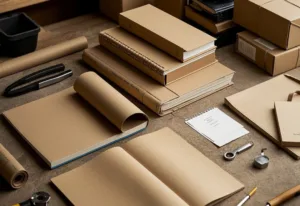
- Diversified Product Range: From high-end Ivory Board (FBB) to specialized NCR (No Carbon Required) paper and eco-friendly food-grade barriers.
Who are the leading tier-one paper manufacturers in China?
When looking for massive volume and standardized quality, the “Big Four” in China dominate the export landscape. These companies are often the backbone of global packaging supply chains.
| Company Name | Core Specialization | Global Presence |
|---|---|---|
| Nine Dragons Paper | Recycled linerboard, corrugated medium | Largest in Asia, multiple overseas hubs |
| Sun Paper | Fine writing paper, coated art paper, dissolving pulp | Strong focus on sustainable forestry |
| Chenming Paper | High-end duplex board, ivory board, newsprint | Extensive R&D and automated coating lines |
| APP China | Gold East Art Paper, folding box board | Massive capacity in premium coated grades |
Which specialized supplier offers the best value for mid-to-large scale buyers?
While the industrial giants focus on commodity volumes, specialized exporters like Yaoji Starlight Technology Co., Ltd. provide the agility and technical customization that international printing houses require.
Yaoji Starlight: Your trusted paper supplier
Established in 2011, Yaoji Starlight Technology Co., Ltd. has spent over a decade refining its position in both domestic and foreign markets. They serve as a vital link for buyers seeking high-performance materials such as:
- Folding Box Board (FBB) / Ivory Card: Essential for premium retail packaging.
- Art Paper & Woodfree Paper: The gold standard for high-definition commercial printing.
- NCR Paper: Specialized carbonless paper for multi-part business forms.
- Food-Grade & Specialty Paper: Including cup paper, metallic paper, and sticker paper.
With a portfolio serving over 1,000 printing companies worldwide, Yaoji Starlight bridges the gap between massive mill production and the specific quality-control needs of international distributors.
What are the critical technical specifications for industrial paper?
To ensure the paper you import meets your local printing machinery requirements, you must define parameters using international standards.
1. Grammage and Thickness (Bulk)
Grammage is measured in gsm (grams per square meter). However, the “bulk” (the ratio of thickness to weight) is often more important for folding endurance.
- Example: A 250gsm Folding Box Board with high bulk may offer the same stiffness as a 300gsm standard board, saving shipping costs.
2. ISO Brightness and Whiteness
- Brightness (R457): Measures the reflection of blue light.
- CIE Whiteness: Measures the appearance under full-spectrum light.
- Note: International buyers usually prefer a CIE Whiteness of 145-160% for premium art paper.
3. Surface Strength (Dennison Wax Test)
Critical for offset printing to prevent “picking,” where the ink pulls fibers off the paper surface. High-quality Chinese suppliers test for wax pick levels ranging from 12A to 18A.
How to verify the quality of a Chinese paper supplier?
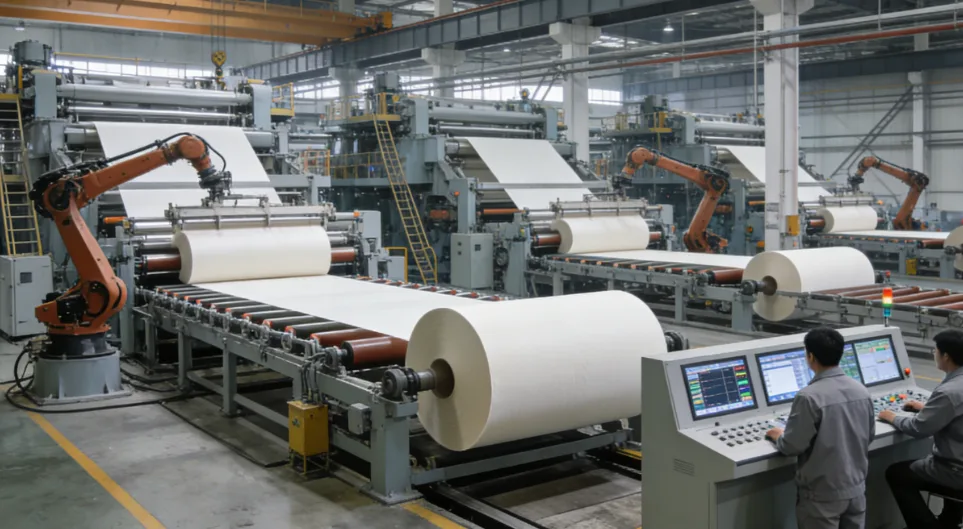
Quality assurance in the paper industry is a multi-step process. Reliable suppliers like Yaoji Starlight adhere to rigorous verification protocols.
Step-by-Step Verification Process:
- Request Technical Data Sheets (TDS): Ensure the moisture content is balanced (usually 5-7%) to prevent curling in different climates.
- Sample Testing: Conduct a “Trial Run” on your printing presses. Check for ink absorption, drying time, and fold crack resistance.
- Third-Party Audits: Look for FSC (Forest Stewardship Council) certification to ensure environmental compliance, and ISO 9001:2015 for quality management.
- Packaging Standards: Ensure the supplier uses “Sea-worthy” packaging—multiple layers of PE-coated kraft paper and strong wooden pallets to prevent moisture ingress during sea transit.
What are the different categories of industrial paper available?
Understanding the classification system used by Chinese exporters helps in sourcing the exact grade needed for your application.
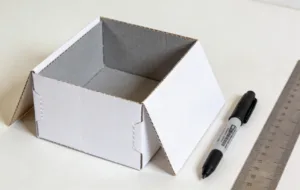
- Folding Box Board (FBB/Ivory Card): Multilayered board with a bleached chemical pulp top. Used for cosmetics, pharmaceuticals, and high-end electronics.
- Coated Art Paper (C2S): Coated on both sides with a smooth, glossy, or matte finish. Ideal for magazines and brochures.
- Woodfree Offset Paper: Uncoated paper made from chemical pulp. Used for books and stationery.
- NCR (Non-Carbon Required): Coated with micro-capsules of dye. Standard grades include CB (Coated Back), CFB (Coated Front and Back), and CF (Coated Front).
- Specialty Food-Grade: Barrier-coated papers for coffee cups and grease-proof food wraps.
What common mistakes do buyers make when importing paper?
Even experienced procurement officers can face hurdles when importing from China. Avoiding these “red flags” can save thousands in lost revenue.
- Ignoring Grain Direction: If the paper grain is perpendicular to the folding line, the packaging will crack. Always specify “Long Grain” or “Short Grain.”
- Underestimating Shipping Weight: Paper is heavy. Buyers often forget to calculate the weight of pallets and protective wrapping in their shipping quotes.
- Focusing Only on Price per Ton: Low-cost paper often has high “dusting” levels, which clogs printing heads and increases maintenance costs. High-quality suppliers like Yaoji Starlight prioritize clean-cut edges to minimize dust.
How does the logistics process work for bulk paper exports?
Shipping paper requires specific handling to maintain structural integrity.
- Container Loading: Most paper is shipped in 20ft containers because paper reaches its weight limit before it fills the volume of a 40ft container.
- Moisture Control: Silica gel desiccant bags are placed inside the container to prevent “sweating” during transit through different climate zones.
- Lead Times: Typically, production takes 15-25 days, with shipping times ranging from 12 days (to SE Asia) to 35-45 days (to Europe/USA).
Why is Yaoji Starlight a preferred partner for global printers?
Choosing a supplier involves more than just looking at a factory. It’s about the relationship and the reliability of the supply chain. Yaoji Starlight Technology Co., Ltd. offers several distinct advantages for the international market:
- Decade-Long Expertise: Since 2011, they have navigated the complexities of international trade and logistics.
- Comprehensive Inventory: They manage a wide array of products, from Ivory Card to Metallic and Sticker Paper, allowing buyers to consolidate different types of paper into a single shipment.
- Global Network: Their partnership with over 1,000 printing companies provides them with deep insights into international quality standards and market trends.
FAQ
What is the minimum order quantity (MOQ) for industrial paper from China?
For standard sizes (like A1, 70x100cm), the MOQ is typically 20 tons (one 20GP container). However, specialized suppliers like Yaoji Starlight may offer flexibility for trial orders or mixed loads of different paper types.
Does Chinese paper comply with FDA food-safety standards?
Yes. High-quality mills produce “Food-Grade” paper that is tested against FDA and EU (LFGB) standards. Always request a specific compliance report for cup paper or food-wrap products.
How can I prevent paper curling during sea transport?
Ensure your supplier uses moisture-proof PE film wrapping and specifies a moisture content of 5-8%. Paper should also be acclimatized to the print room environment for 24-48 hours before use.
What is the difference between FBB and SBS board?
FBB (Folding Box Board) contains mechanical pulp layers, offering higher bulk and stiffness. SBS (Solid Bleached Sulfate) is made entirely of chemical pulp, offering a whiter internal core and higher purity.
Can I get custom-sized sheets or only standard rolls?
Most Chinese suppliers provide both. Custom sheet cutting is common, though it may add 3-5 days to the production timeline. Standard roll widths are usually more readily available for immediate shipment.