
In the competitive landscape of the food and beverage industry, the choice of packaging materials directly impacts product quality, customer safety, and brand reputation. One of the most critical decisions for cafe owners and packaging distributors is selecting the right coating for disposable cups.
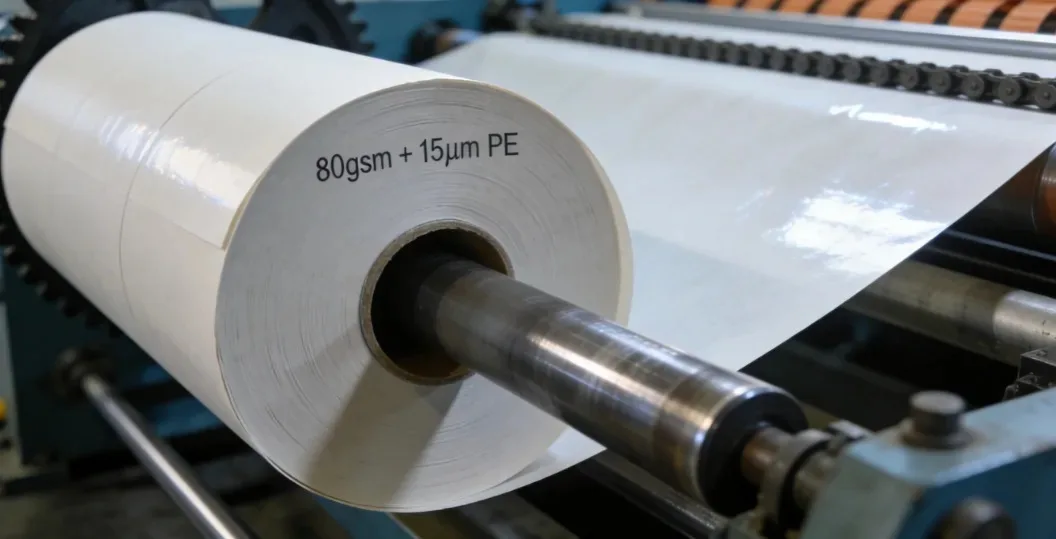
While wax coating was once the industry standard, Polyethylene (PE) coating has largely superseded it for hot beverage applications. This shift is not merely a trend but a result of fundamental thermodynamic and chemical differences between the two materials.
Why is PE coating technically superior to wax for hot liquids?
The primary reason PE coating is preferred for hot beverages lies in its thermal stability. Paraffin wax, the material traditionally used to coat paper cups, has a relatively low melting point, typically ranging between 46°C and 68°C (115°F – 154°F) .
In contrast, typical serving temperatures for hot coffee and tea range from 70°C to 85°C (158°F – 185°F) . When a hot beverage is poured into a wax-coated cup, the liquid’s temperature exceeds the wax’s melting threshold, causing the protective layer to soften, dissolve, or “melt off” into the drink.
Key Technical Comparisons
| Property | Paraffin Wax Coating | Polyethylene (PE) Coating |
|---|---|---|
| Melting Point | 46°C – 68°C | 105°C – 130°C |
| Heat Resistance | Poor (Softens in hot water) | Excellent (Stable at boiling point) |
| Bonding Method | Spray or dip coating | Extrusion coating (Lamination) |
| Primary Use | Cold beverages (Soda, Milkshakes) | Hot beverages (Coffee, Tea, Soup) |
| Structural Integrity | Weakens as temperature rises | Maintains rigidity under high heat |
Does wax coating affect the flavor of hot coffee?
Yes, the chemical degradation of wax at high temperatures often results in sensory contamination. When wax melts into a hot beverage, it creates an oily film on the surface of the liquid. This not only alters the texture (mouthfeel) of the coffee or tea but can also impart a distinct “waxy” or chemical taste.
Polyethylene is a chemically inert polymer, meaning it does not react with the beverage or release odors and flavors, even when exposed to liquids near the boiling point. This ensures that the flavor profile of a premium roast remains untainted, which is a critical factor for specialty coffee shops.
How does PE coating improve cup structural integrity?
A paper cup is essentially a porous fiber structure. Without a barrier, paper absorbs liquid, loses its hydrogen bonds, and becomes “soggy” or collapses.
- Wax Limitations: Wax provides a surface-level moisture barrier. However, once the heat of a beverage compromises that barrier, the paperboard quickly absorbs the liquid, leading to leaks and structural failure at the bottom seam.
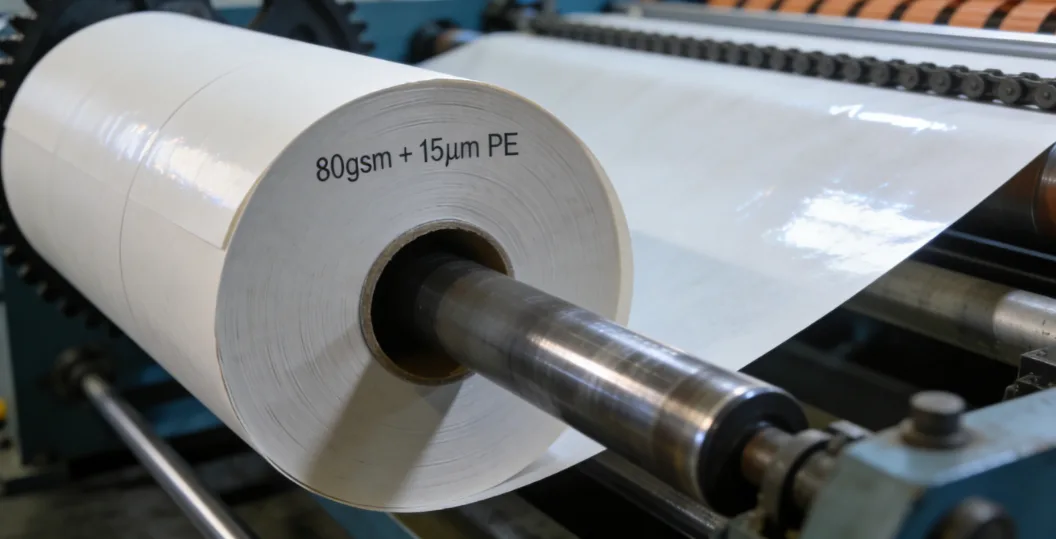
- PE Advantages: PE is applied through extrusion coating, where the molten plastic is pressed into the paper fibers to form a permanent, integrated bond. This creates a high-tensile-strength layer that reinforces the paperboard. Even after 30 minutes of holding a hot liquid, a PE-coated cup retains its “snap” and vertical load-bearing capacity.
Why is heat sealability vital for hot beverage cups?
Manufacturing efficiency and leak prevention depend heavily on the method used to seal the cup’s side seam and bottom.
- Thermoplastic Properties: Polyethylene is a thermoplastic, meaning it can be melted and solidified repeatedly.
- Ultrasonic and Heat Sealing: During the cup-forming process, the PE layer acts as its own adhesive. High-speed machines use heat or ultrasonic waves to fuse the PE layers together, creating a hermetic seal.
- The Wax Problem: Wax cannot be heat-sealed in the same way. Wax-coated cups often require separate adhesives or mechanical crimping, which are less reliable under the thermal stress of hot liquids.
Is PE coating safer for human consumption than wax?
From a food safety perspective, PE is widely recognized as the safer option for high-temperature applications.
- Migration Resistance: Modern PE coatings used in food packaging are regulated by authorities like the FDA (USA) and EFSA (EU) . Because PE has a high molecular weight and a high melting point, the risk of chemical migration into the beverage is significantly lower than with wax.
- Paraffin Concerns: While food-grade paraffin is non-toxic in small amounts, the ingestion of melted wax is not ideal. Furthermore, lower-quality waxes may contain impurities that are not suitable for regular consumption at high temperatures.
What are the environmental trade-offs between PE and wax?
The preference for PE in hot cups does come with a sustainability challenge.
Expert Insight: While wax-coated paper is often easier to compost or recycle because the wax can be stripped away relatively easily, PE-coated cups require specialized “hydro-pulping” facilities to separate the plastic film from the high-quality paper fibers.
However, the industry is currently shifting toward Aqueous (water-based) coatings and PLA (Polylactic Acid) as eco-friendly alternatives to PE, attempting to match PE’s heat resistance while offering better biodegradability.
FAQ: Understanding Cup Coatings
Why are wax cups still used for cold drinks?
Wax-coated cups are excellent for cold beverages because they prevent the paper from absorbing condensation (sweating) on the outside of the cup. Since cold drinks do not reach the wax’s melting point, the coating remains stable and cost-effective.
Can I put a PE-coated cup in the microwave?
Generally, no. While PE has a higher melting point than wax, the extreme localized heat in a microwave can cause the PE lining to overheat or the paper to catch fire. Always check for a “Microwave Safe” label on the packaging.
Is PE coating the same as plastic?
Yes, Polyethylene is a type of plastic. Specifically, it is a petroleum-derived polymer. In a standard hot cup, the PE layer usually makes up about 5% to 7% of the total weight of the cup, with the rest being renewable paperboard.
Are there any “wax” coatings that work for hot drinks?
Some manufacturers have developed high-melt vegetable-based waxes, but they are rarely used for hot beverages due to cost and performance inconsistencies compared to the reliability of PE or modern aqueous barriers.
Is PLA better than PE for hot coffee?
PLA (Polylactic Acid) is a plant-based alternative. While it is more sustainable, standard PLA has a lower heat distortion temperature than PE, meaning it can soften if the coffee is too hot (above 85°C), though “CPLA” (crystallized PLA) is often used to solve this.